THE BUILD JOURNAL · 22 SEPTEMBER 2026
Before a turbo upgrade: the checks that matter.
A turbo upgrade is not a single-part decision. Before a workshop starts the job, make sure the exact application, supporting systems and installation plan all agree.
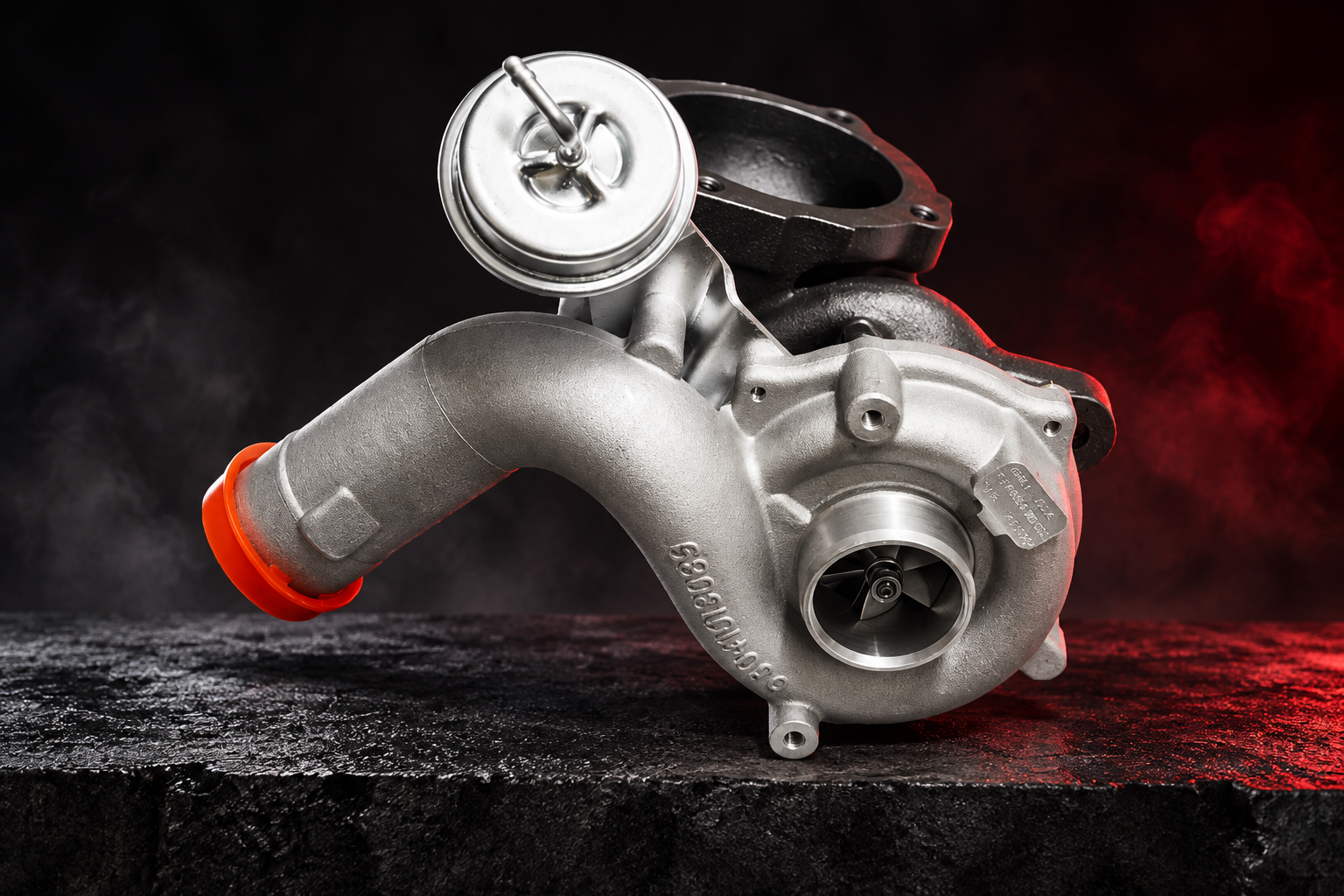
Start with the vehicle, not the advertised power figure. Confirm the make, model, generation, engine code, emissions equipment and the full part number. A similar-looking engine or model year is not enough to confirm compatibility.
1. Confirm the complete application
Check what is included with the selected part and what is not. Depending on the application, an upgrade may require specific hardware, gaskets, oil or coolant connections, intake routing, exhaust components, calibration or supporting fuel-system and cooling work. Your installer should verify this against the component instructions and the vehicle in front of them.
2. Treat the old turbo failure as a diagnosis task
If this is a replacement rather than a planned upgrade, do not assume the turbo is the root cause. Loss of power, smoke, oil consumption or noise can point to issues elsewhere in the engine, air, exhaust or lubrication system. Diagnose the reason for the original problem before fitting a new component.
3. Prepare the oil and air systems
Cleanliness matters. Inspect hoses, connections and the intake tract for damage and debris. Use the fluids and filters specified for the vehicle, and follow the component manufacturer’s instructions for oil supply and drain routing. Do not substitute sealants or modify a turbo’s calibration unless the component documentation specifically requires it.
Turbo oil drainage needs a clear, gravity-led route where the application uses one. Kinks, restrictions and a drain that cannot return oil freely can create problems that look like a failed component. This is an installation detail for a competent workshop, not an area to guess at.
4. Plan the supporting build
Think through the system around the turbo: intake, charge air cooling, exhaust, fuelling, ignition and drivetrain. The required parts differ by platform and intended use. A bundled set is not a promise of a particular output or a substitute for a vehicle-specific plan.
5. Give your installer the right information
- Vehicle registration, model year, generation and engine code
- The exact Endura part name and SKU
- Current modifications and software status
- Any fault codes, smoke, noise, oil-consumption or boost-control symptoms
- Your intended use and regional road-use requirements
That short brief helps your dealer confirm the part and lets the workshop identify anything that needs attention before installation begins.
Choose the next step
Explore the listed turbo and boost applications, then use the dealer locator to discuss availability and fitment. Endura supplies performance parts; installation and calibration are handled by your chosen workshop.
Technical reference: Garrett turbocharger installation guide and Garrett oil drainage guidance. Always use the instructions for the specific component and vehicle.